

Your living room and kitchen are two of the most important spaces in your home. They are where you relax, entertain guests, prepare meals, and spend time with family. With a few thoughtful updates, you can make both areas feel stylish, comfortable, and connected without completely remodeling your home.
These living room and kitchen home decor ideas focus on practical styling, warm details, and simple changes that can create a polished look. Whether you prefer modern, cozy, minimalist, rustic, or contemporary interiors, these ideas can inspire your next home refresh.
1. Create a Coordinated Color Palette
One of the easiest ways to make a living room and kitchen feel connected is to use a consistent color palette. Choose two or three main shades and repeat them throughout both spaces.
For example, warm white walls, natural wood, and soft beige accents can create a calm and welcoming atmosphere. Use the same colors in cushions, rugs, kitchen accessories, artwork, or decorative objects to create visual harmony.
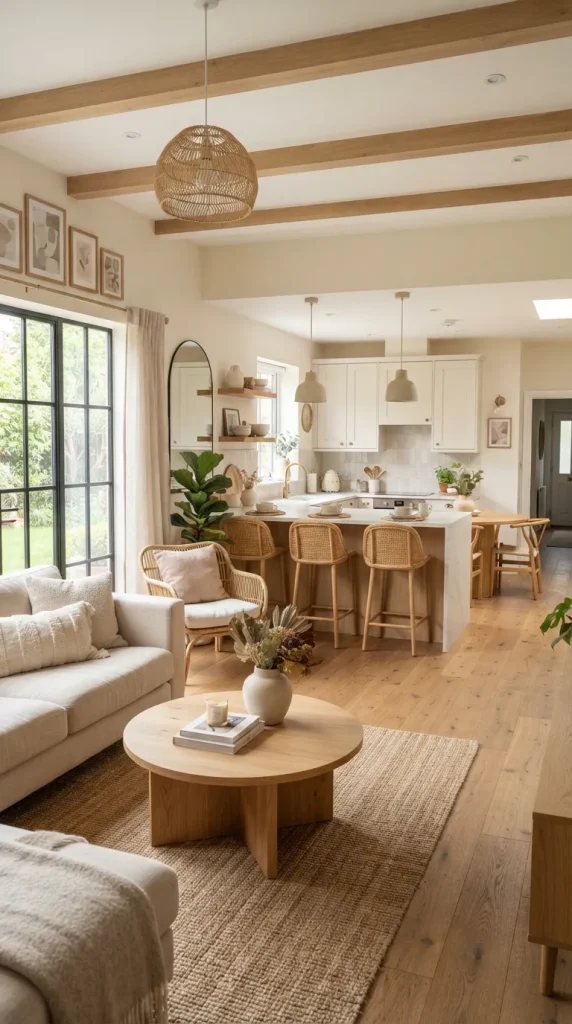
2. Add Warm Wood Accents
Wood brings warmth and character to both living rooms and kitchens. Consider adding a wooden coffee table, floating shelves, cutting boards, bar stools, or decorative trays.
If your kitchen already has wooden cabinets or flooring, repeat similar wood tones in the living room. This simple design technique can make open-plan spaces feel more cohesive and inviting.
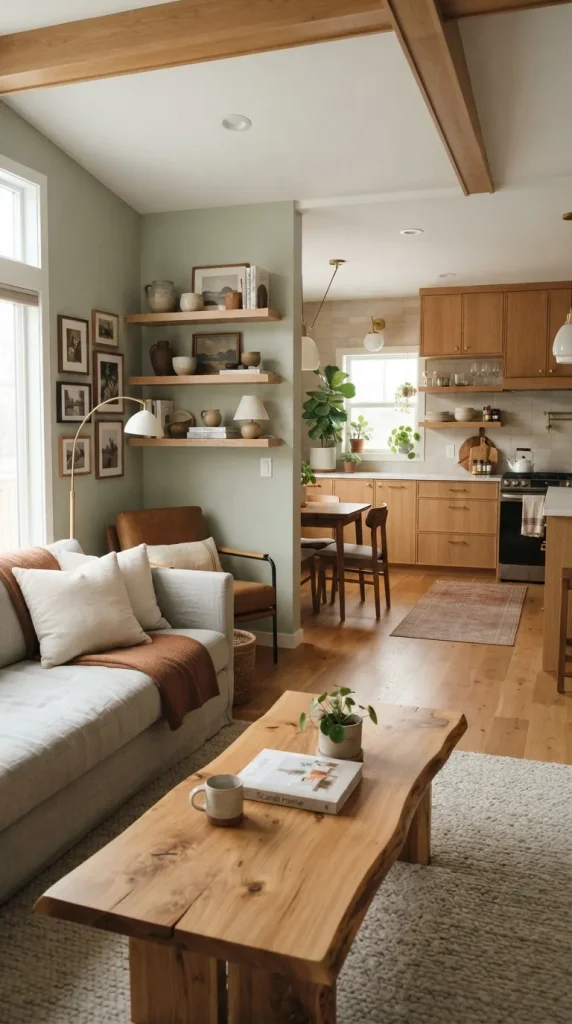
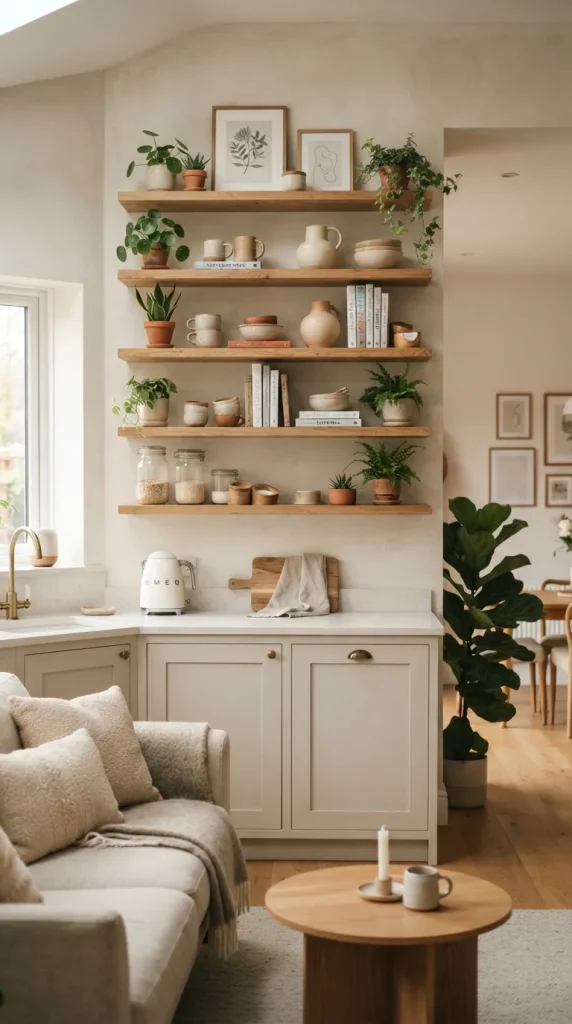
3. Style an Open Shelving Display
Open shelves can combine storage and decoration. In the kitchen, display attractive plates, mugs, glassware, cookbooks, and small plants. In the living room, use shelves for books, framed artwork, candles, and decorative objects.
Avoid overcrowding the shelves. Leaving some empty space creates a cleaner and more sophisticated appearance.
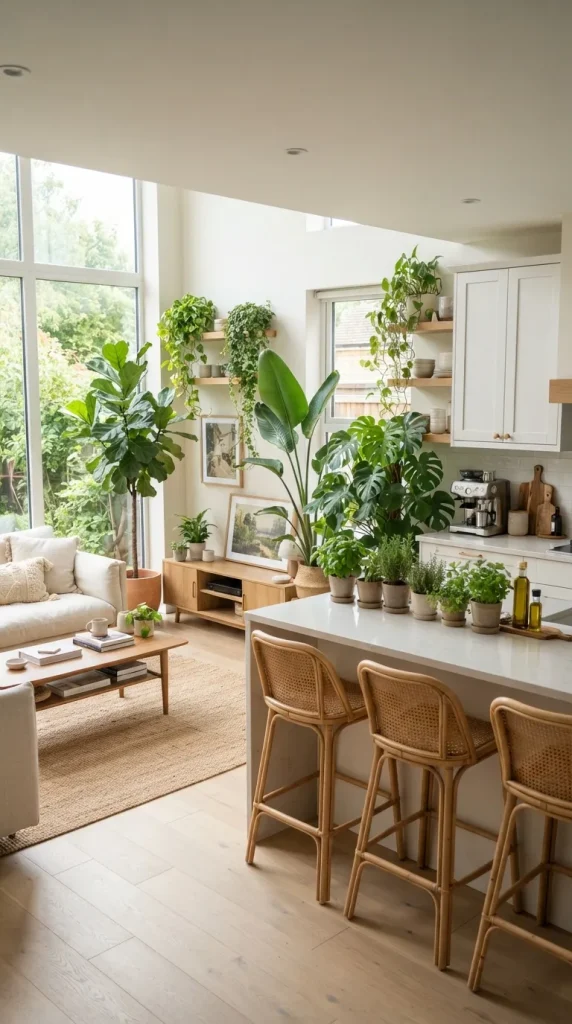
4. Bring in Indoor Plants
Plants can instantly make a home feel fresher and more welcoming. Place a larger plant beside the living room sofa or near a bright window. In the kitchen, use small herb pots or compact plants on open shelves and counters.
Choose planters that complement your existing decor for a coordinated look.
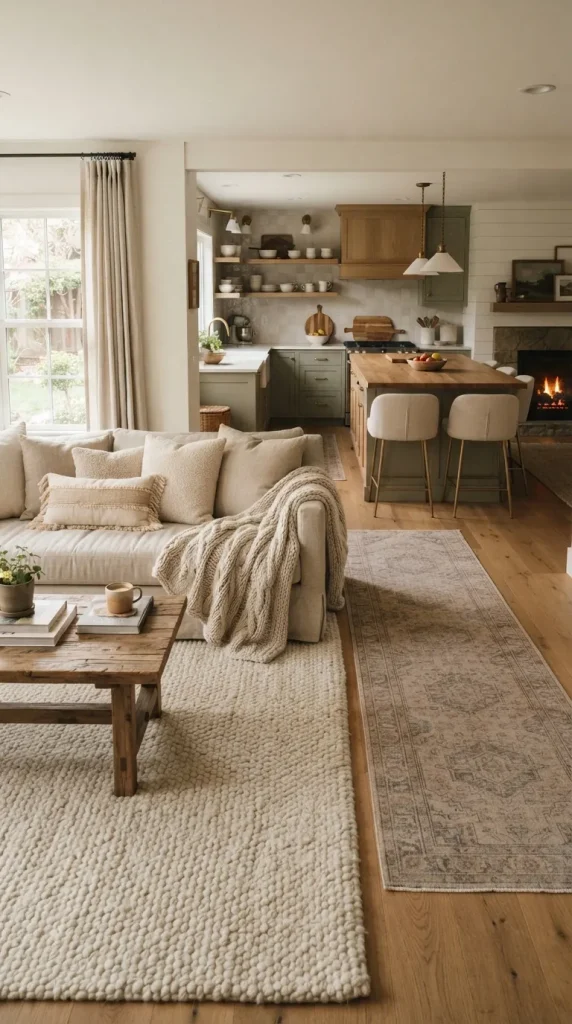
5. Layer Comfortable Textiles
Soft textiles can make a living room feel cozy while adding personality to the space. Layer a textured area rug with comfortable cushions and a throw blanket.
You can continue similar textures in the kitchen through fabric bar stools, runners, curtains, or washable mats. Neutral fabrics work particularly well when you want an elegant and timeless interior.
6. Make Lighting Part of the Decor
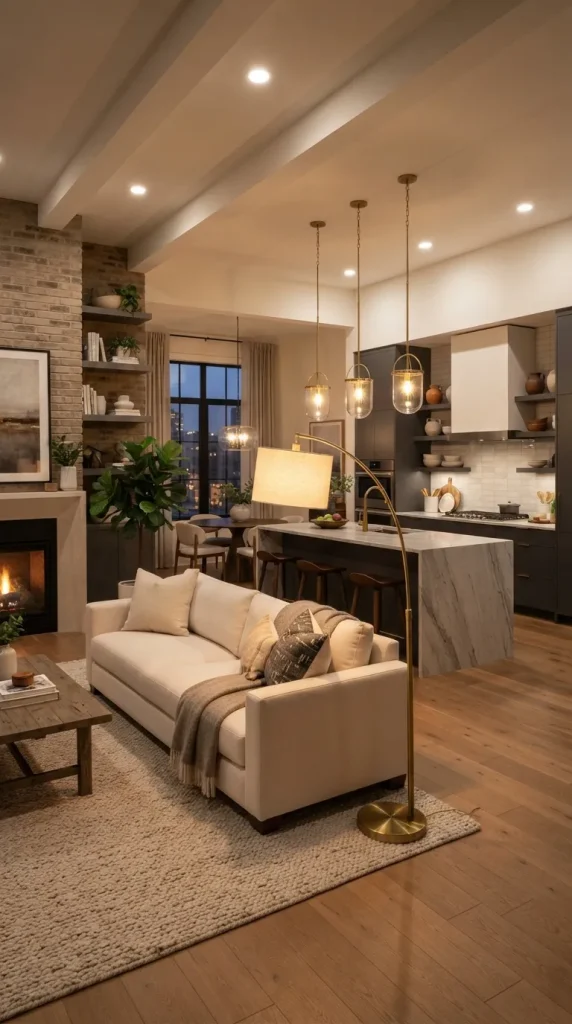
Good lighting is both functional and decorative. In the living room, combine ceiling lights with floor lamps, table lamps, or wall sconces.
For the kitchen, pendant lights above an island or dining area can become an attractive focal point. Warm-toned lighting can make both rooms feel more comfortable during evenings.
7. Create a Statement Wall
A statement wall can add personality without changing the entire room. Try framed artwork, textured wallpaper, decorative molding, or a carefully styled gallery wall.
For a connected living room and kitchen, choose artwork or patterns that share similar colors. This creates continuity while allowing each area to maintain its own character.

8. Use a Stylish Kitchen Island Display
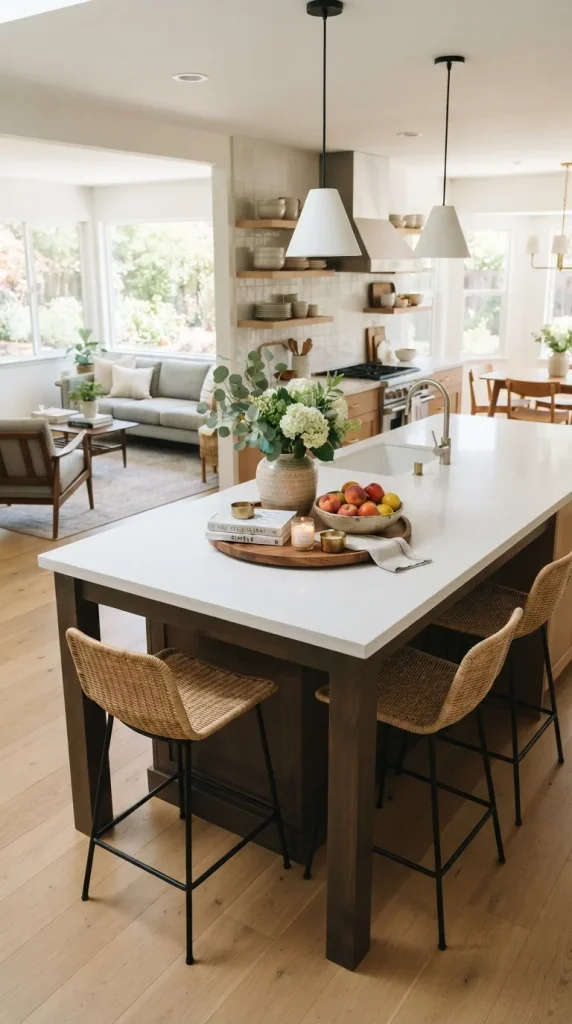
The kitchen island often becomes the visual center of an open-plan home. Keep the countertop practical but add a few decorative elements, such as a wooden tray, ceramic vase, fruit bowl, or fresh flowers.
The key is balance. Too many accessories can make the kitchen look cluttered, while a small curated arrangement creates an intentional appearance.

9. Define the Living Room With a Rug
An area rug can help visually separate the living room from the kitchen, especially in an open floor plan. Choose a rug large enough to sit beneath the main seating arrangement.
Patterns, neutral textures, and subtle geometric designs can add interest without overwhelming the rest of the decor. Select colors that coordinate with nearby kitchen finishes for a unified look.
10. Add Personal Decorative Details
The best home decor reflects the people who live there. Add meaningful artwork, favorite books, family photographs, handmade ceramics, travel souvenirs, or other objects that tell your story.
In the kitchen, display a beautiful serving board or ceramic collection. In the living room, create a small decorative arrangement on a coffee table or console. Personal touches can make your home feel unique rather than overly styled.

Final Thoughts
Refreshing your living room and kitchen does not always require expensive furniture or major renovations. Simple changes such as coordinated colors, natural textures, plants, layered lighting, and carefully selected accessories can make a noticeable difference.
When decorating connected spaces, focus on creating visual flow while keeping each area functional. Choose pieces you genuinely enjoy and avoid filling every surface with decorations. A balanced approach can create a home that feels stylish, comfortable, and practical.





Leave a Reply