House crafts are among the most engaging activities for kindergarten children. They encourage creativity, strengthen fine motor skills, and help young learners understand concepts like family, homes, neighborhoods, and community life. Whether you’re a parent, teacher, homeschooler, or daycare provider, house-themed crafts provide endless opportunities for hands-on learning and imaginative play.
These simple house craft ideas are designed specifically for kindergarten-aged children. They use easy-to-find materials, require minimal preparation, and help children develop important skills while having fun. From paper houses to recycled cardboard creations, these projects are perfect for classroom activities, rainy days, seasonal lessons, and creative playtime.
Why House Crafts Are Great for Kindergarten Kids
Before diving into the ideas, let’s explore why house crafts are beneficial:
- Improve fine motor skills through cutting, folding, and gluing.
- Encourage creativity and self-expression.
- Introduce basic architectural concepts.
- Teach shapes, colors, and patterns.
- Help children learn about families and communities.
- Develop problem-solving and critical-thinking skills.
- Promote storytelling and imaginative play.
Now let’s explore ten exciting house craft ideas that kindergarteners will love.
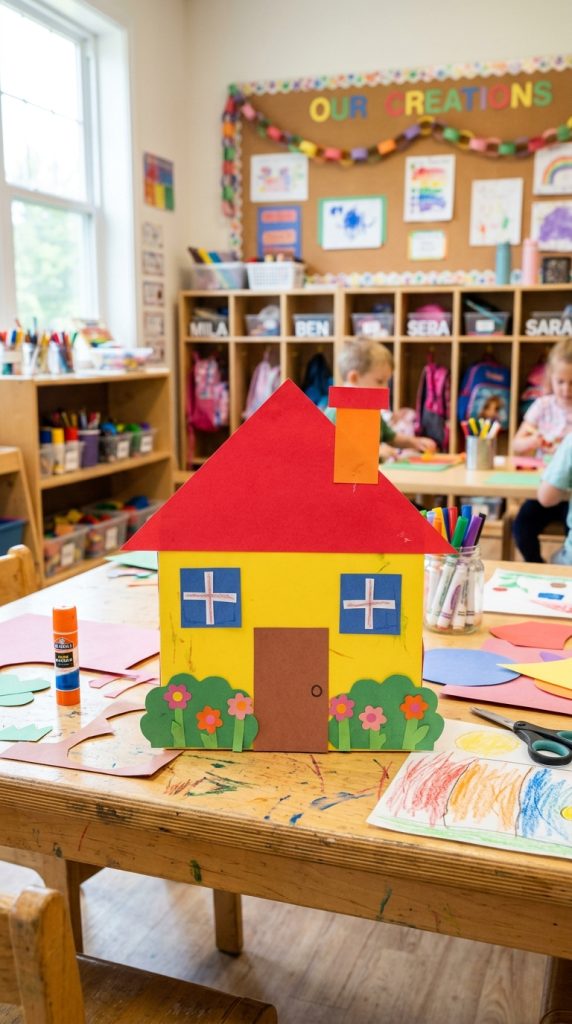
1. Paper Shape House Craft
A paper shape house is one of the easiest crafts for young children. It helps them recognize and identify geometric shapes while creating a colorful home.
Materials
- Colored construction paper
- Glue stick
- Child-safe scissors
- Markers or crayons
Instructions
- Cut a square for the house body.
- Cut a triangle for the roof.
- Add rectangles for doors.
- Add small squares for windows.
- Let children decorate with crayons and stickers.
Learning Benefits
- Shape recognition
- Color identification
- Fine motor development
- Creative expression
Children can create entire neighborhoods using different colored houses.
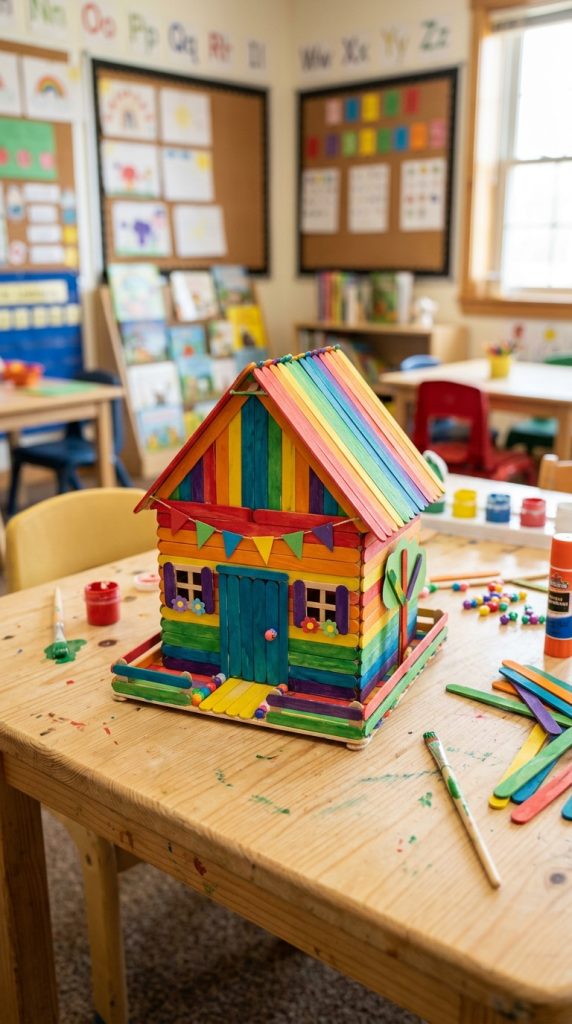
2. Popsicle Stick House Craft
Popsicle stick crafts are always popular among kindergarteners because they are simple and enjoyable.
Materials
- Popsicle sticks
- Non-toxic glue
- Paint
- Decorative stickers
Instructions
- Glue popsicle sticks side by side.
- Create a triangle roof with additional sticks.
- Allow the structure to dry completely.
- Paint the house in bright colors.
- Decorate with windows, flowers, and doors.
Learning Benefits
- Hand-eye coordination
- Patience and focus
- Creative design skills
This craft can also be displayed as classroom artwork.
3. Cardboard Box Mini House
Turn old packaging into a fun kindergarten project with a recycled cardboard house.
Materials
- Small cardboard boxes
- Paint
- Glue
- Colored paper
- Markers
Instructions
- Use a small box as the base.
- Cut roof shapes from cardboard.
- Attach the roof with glue.
- Paint and decorate.
- Add paper doors and windows.
Learning Benefits
- Recycling awareness
- Imaginative thinking
- Construction skills
Children love transforming ordinary materials into creative masterpieces.
4. Paper Bag House Craft
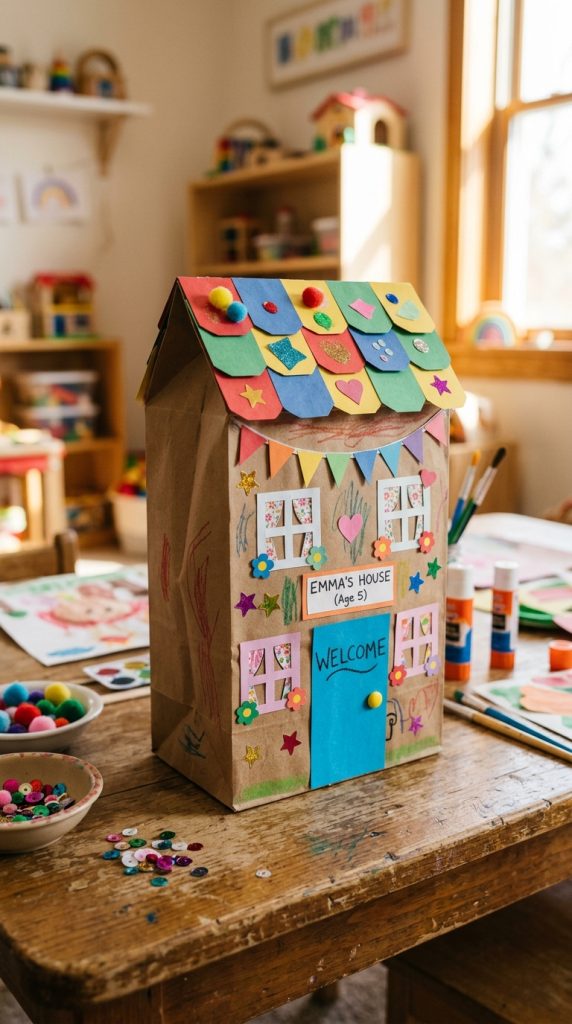
Paper bags can easily become adorable miniature houses.
Materials
- Brown paper lunch bags
- Colored paper
- Glue
- Crayons
Instructions
- Fill the paper bag lightly with paper scraps.
- Fold the top to create a roof shape.
- Glue paper windows and doors.
- Draw flowers, trees, and pathways.
Learning Benefits
- Fine motor practice
- Creative storytelling
- Understanding home environments
This activity works wonderfully during community helper lessons.
5. Foam Sheet House Craft
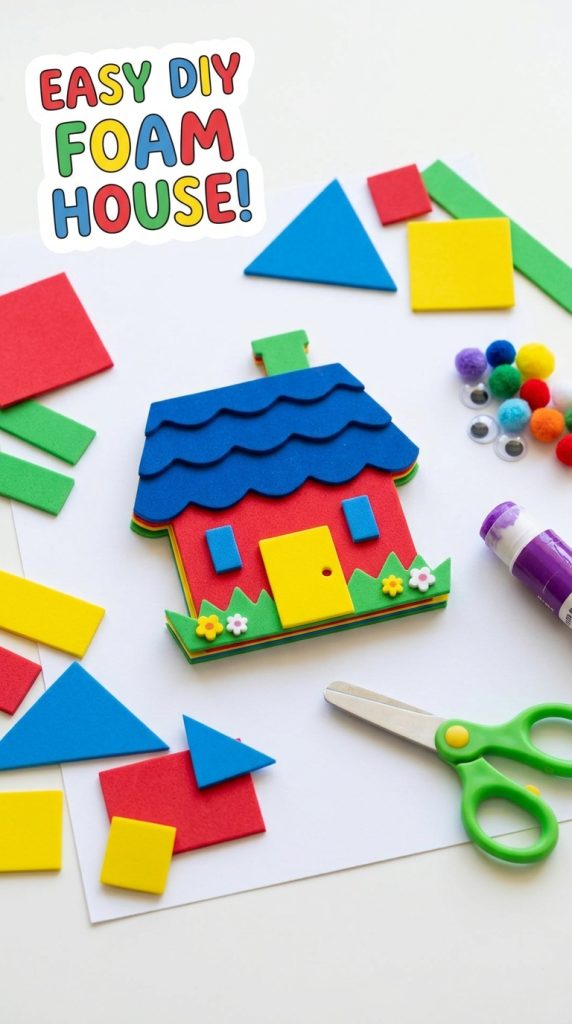
Foam sheets are colorful, durable, and easy for small hands to work with.
Materials
- Foam craft sheets
- Child-safe scissors
- Glue
- Decorative gems
Instructions
- Cut house shapes from foam sheets.
- Create roofs, doors, and windows.
- Layer pieces to create dimension.
- Decorate with foam stickers.
Learning Benefits
- Texture exploration
- Shape building
- Design creativity
Children enjoy the vibrant colors and soft materials.
6. Stick and Nature House Craft
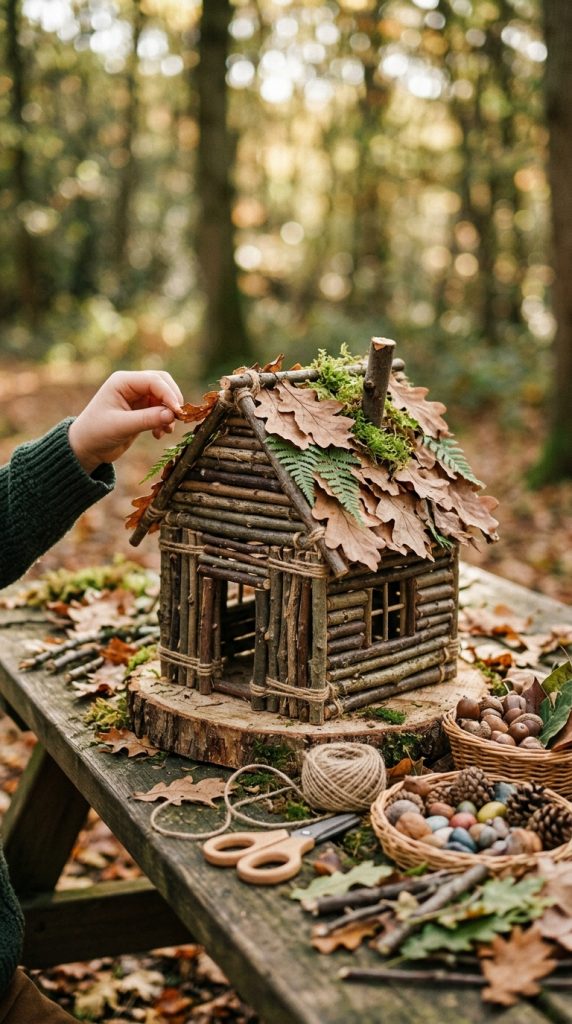
Bring outdoor learning into craft time with natural materials.
Materials
- Small sticks
- Leaves
- Glue
- Cardstock paper
Instructions
- Collect sticks during an outdoor walk.
- Arrange them into a house shape.
- Glue onto cardstock.
- Add leaf roofs and natural decorations.
Learning Benefits
- Nature exploration
- Environmental awareness
- Observation skills
This project combines science and art in a meaningful way.
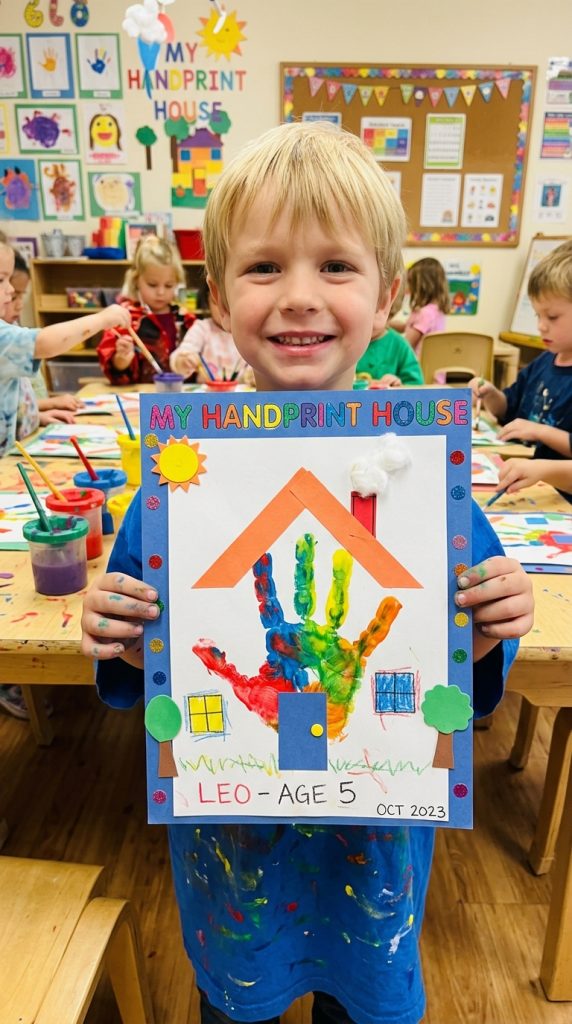
7. Handprint House Craft
Handprint crafts create memorable keepsakes for families.
Materials
- Washable paint
- White cardstock
- Markers
Instructions
- Paint the child’s hand.
- Press onto paper.
- Once dry, turn the handprint into a house.
- Draw windows, doors, and decorations.
Learning Benefits
- Sensory learning
- Personal expression
- Creativity
Parents often treasure these crafts for years.
8. Paper Plate House Craft
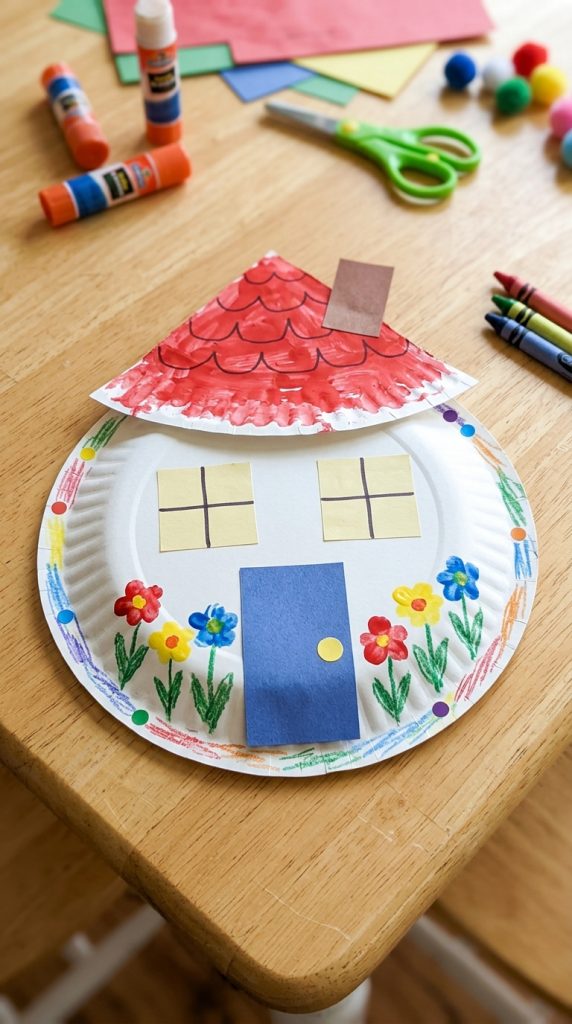
Paper plates provide a sturdy base for creating fun house designs.
Materials
- Paper plates
- Paint
- Colored paper
- Glue
Instructions
- Paint the paper plate.
- Cut a triangle roof from colored paper.
- Add windows and doors.
- Decorate with flowers and clouds.
Learning Benefits
- Artistic development
- Shape recognition
- Fine motor control
This craft is ideal for large kindergarten groups.
9. Felt House Activity Craft
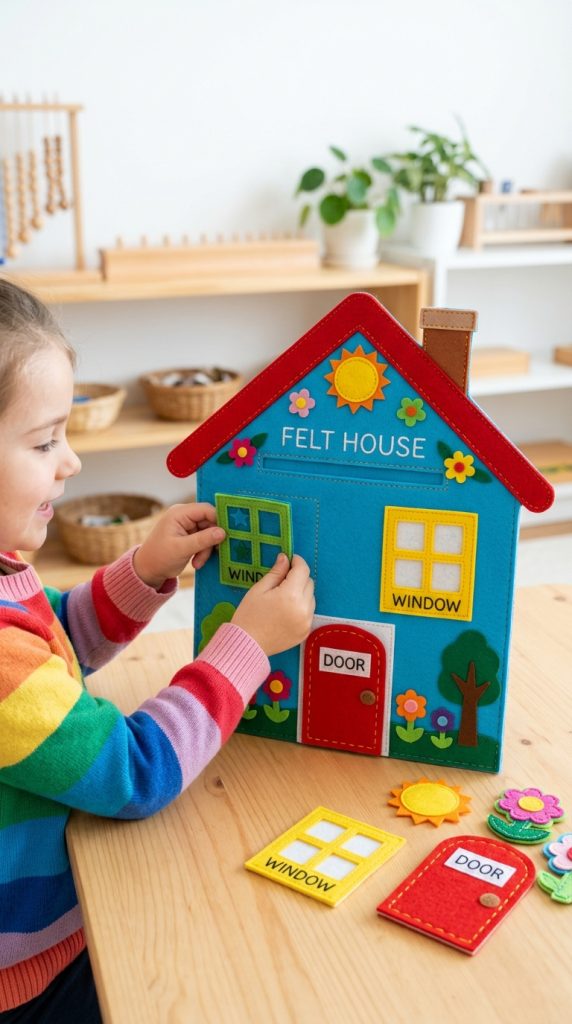
Felt crafts are reusable and perfect for interactive learning.
Materials
- Felt sheets
- Child-safe scissors
- Fabric glue
Instructions
- Cut felt into house shapes.
- Create removable windows and doors.
- Allow children to rearrange the pieces.
- Build different house designs.
Learning Benefits
- Problem-solving
- Creative experimentation
- Independent play
Teachers can use felt houses for storytelling sessions.
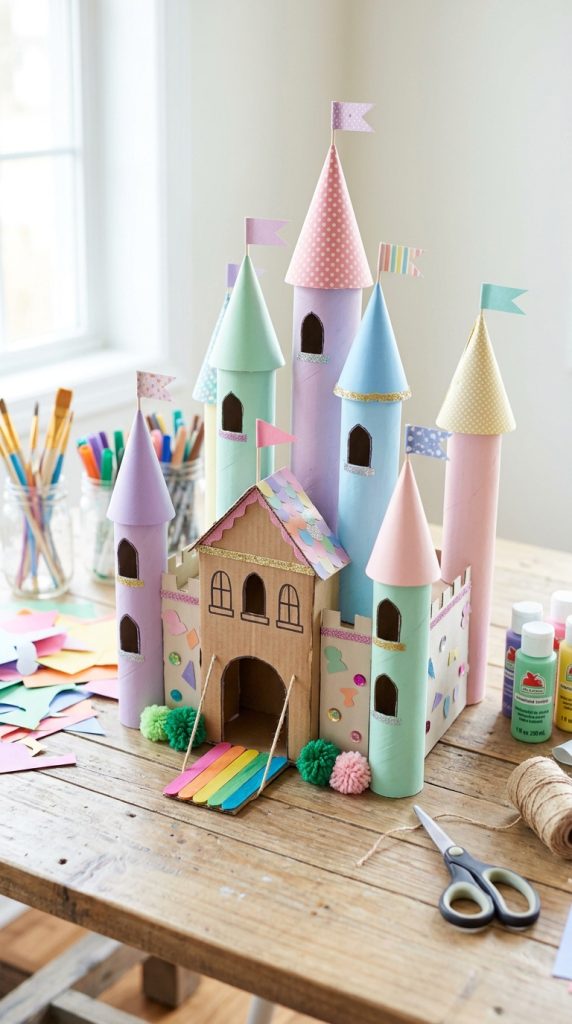
10. Fairy Tale House Craft
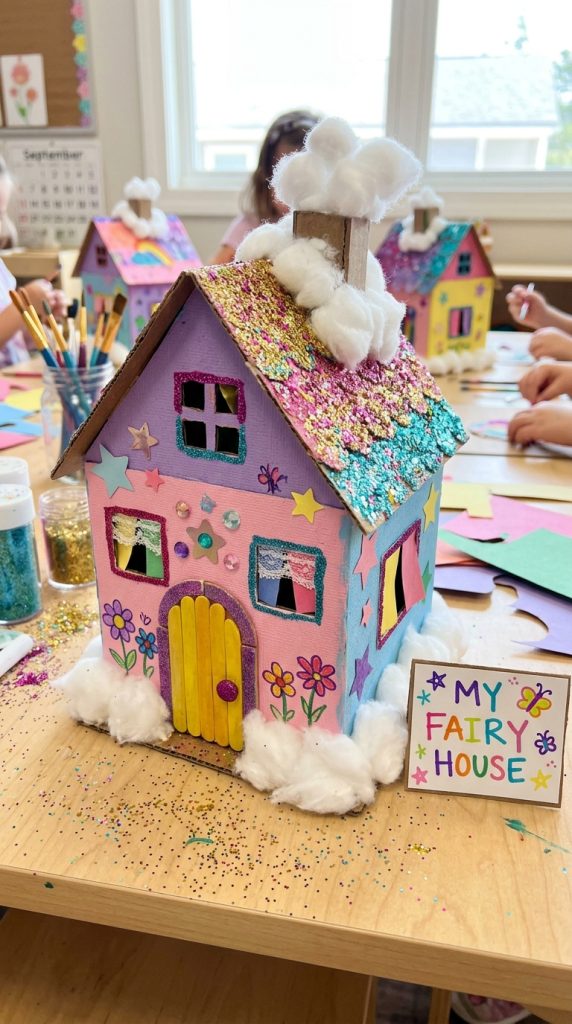
Bring favorite stories to life with a magical fairy tale house.
Materials
- Construction paper
- Cotton balls
- Glitter
- Markers
- Glue
Instructions
- Create a colorful paper house.
- Add cotton ball clouds.
- Decorate with glitter accents.
- Encourage children to invent stories about the house.
Learning Benefits
- Imagination development
- Storytelling skills
- Creative confidence
This activity works especially well alongside reading lessons.
Tips for Successful Kindergarten House Crafts
To ensure children have the best crafting experience:
Keep Instructions Simple
Use clear, step-by-step directions that are easy to follow.
Choose Safe Materials
Always use child-safe scissors, non-toxic glue, and washable paints.
Encourage Creativity
Allow children to personalize their houses rather than following a strict example.
Focus on Fun
The process is more important than creating a perfect craft.
Incorporate Learning
Discuss shapes, colors, families, and neighborhoods while crafting.
Educational Extensions for House Crafts
You can expand these activities into complete learning experiences:
House Counting Activity
Count windows, doors, and shapes.
Neighborhood Display
Create a classroom town using everyone’s houses.
Story Writing
Have children tell stories about who lives in their house.
Community Lessons
Discuss different types of homes around the world.
Shape Identification
Review triangles, squares, rectangles, and circles.
Final Thoughts
House crafts for kindergarten are more than just fun art projects. They provide valuable opportunities for children to learn, create, and explore the world around them. Whether using paper, cardboard, foam, sticks, or recycled materials, these crafts encourage imagination while supporting important developmental skills.
The best house crafts are simple, colorful, and open-ended, allowing every child to express their unique creativity. By incorporating these ten ideas into your classroom or home activities, you’ll create engaging learning experiences that children will remember and enjoy.
From shape houses to fairy tale homes, every project offers a chance for little learners to build confidence, strengthen fine motor skills, and have fun through hands-on creativity.


Leave a Reply